
Founding Story: From Yonsei University to Digital Mental Health
SYMPLE began in order to build technology that notices change before you break down, not after.
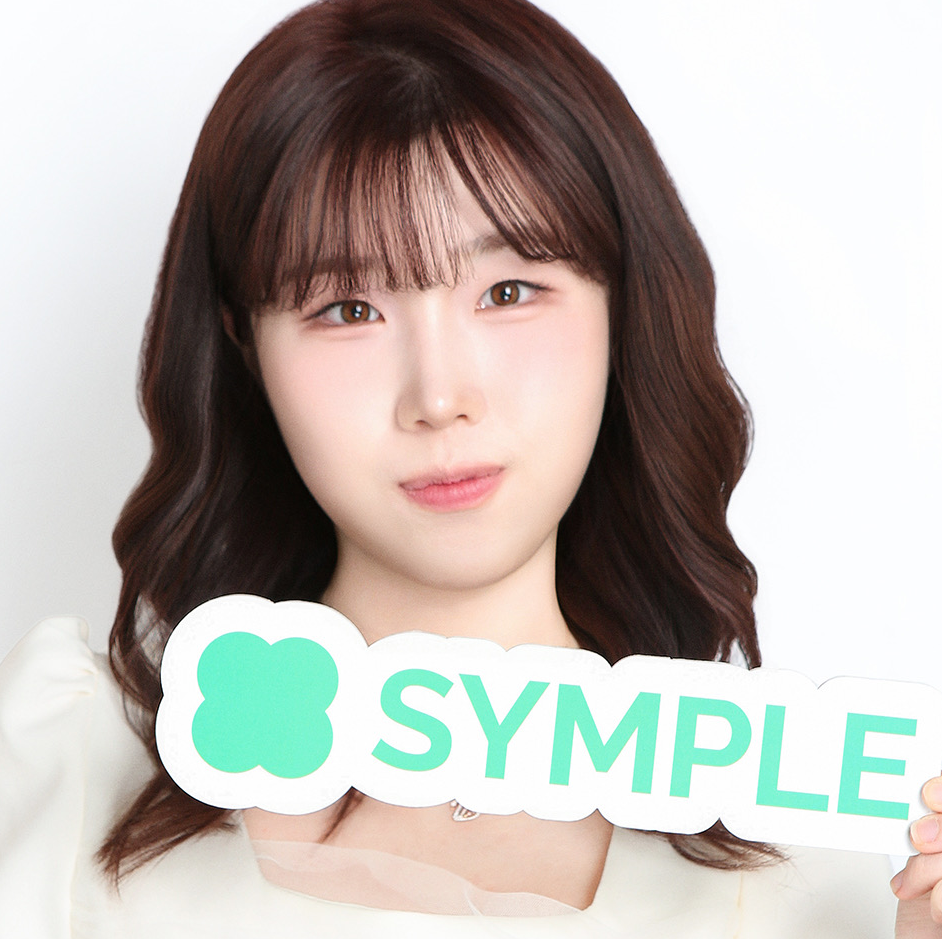
Minsoo · Founder & CEO
Building SYMPLERead 8 min
If we answer in one sentence why SYMPLE began, it is this. To build technology that notices change before a person breaks down, rather than technology that analyzes the causes after a person has broken down. SYMPLE is a digital mental health startup that started with a Yonsei University background, and its founder is Minsoo Kim (Founder & CEO).
01. The problem of noticing too late
There is a scene we have run into again and again. The moment when someone struggles for a long time and finally breaks down, and only then do the people around them belatedly say, “they did seem a little off back then.”
It is the same at work. When an important employee decides to leave, only then does the organization look for reasons. Was the workload too heavy? Was the compensation lacking? Were relationships the problem? But human experience is never that sudden. Before that, changes quietly accumulate — the sense of accomplishment fades, rest no longer restores, and just going to work becomes a burden.
The problem is that both individuals and organizations usually notice that change when it is already too late. Why we came to hold on to this problem is laid out in Why We Study Employee Burnout.
02. The limits of existing approaches
Many tools that deal with mental health kick in only after a problem has already grown large. When the moment of diagnosis is late, the options that remain are few too.
Another limit is the method of measurement. Many methods line people up in a single row by absolute score. But everyone has a different usual state. If you group someone who naturally has low energy together with someone who has recently broken down sharply under the same score, you miss the signals that actually matter. What is needed is not “is this person normal,” but “how much, and in which direction, has this person changed from their usual self.”
03. SYMPLE’s idea: observe change frequently
So SYMPLE’s founding idea is simple. To look at change relative to a personal baseline rather than absolute scores. And to observe that change frequently.
To see change, a single measurement is not enough. You have to know your usual self to know whether your current self has changed, and to do that, you have to observe often. The problem is that long surveys and periodic interviews carry a heavy burden and are hard to do often. And if you cannot do it often, you cannot see change.
04. Why voice
At this point, we turned our attention to voice. Speaking carries little burden and can be shared briefly and often. On top of that, a voice carries not only the content of what is said but also the way it is said (pitch, pace, pauses, voice quality), and this can be connected to a state.
But from the very start, we made one thing clear. Voice is not the sole judge but a supporting signal. We do not conclude anything about a person from voice alone; we place several signals together and read change carefully. The principle of seeing voice as a clue to a state is covered in Voice Stress Biomarkers.
05. Starting at Yonsei University
SYMPLE started with a Yonsei University background. At the point where a person’s mind, data, and technology meet, a problem awareness of looking at the time before you break down rather than after grew out of this background.
We are wary of technology being used in a direction that surveils people. So SYMPLE’s design principle is clear. To individuals, it provides self-understanding; to the organization, it provides only group-level signals that cannot identify a specific person.
06. What we are building
This problem awareness led to two products. KKEBI, voice-based mind care for employees, and Duck’s Dream, an app with routines for recovering from stress in everyday life. They take different forms, but they stand on the same belief: recovery and care before you break down.
For the overall picture of what kind of company SYMPLE is, see About SYMPLE.
Let’s talk
If you would like to talk with SYMPLE about research collaboration, piloting, organizational wellness, and more, reach out at symple.help@gmail.com. You can also follow our news on Instagram (@symple.kr).
References
- WHO. Burn-out an “occupational phenomenon”: ICD-11. 2019.
- Insel TR. Digital phenotyping: technology for a new science of behavior. JAMA. 2017;318(13):1215–1216.
Frequently asked questions
- Where did SYMPLE start?
- SYMPLE is a digital mental health startup that started with a Yonsei University background. Its founder is Minsoo Kim (Founder & CEO).
- Why was SYMPLE created?
- Burnout and attrition build up gradually, but both individuals and organizations usually notice only when it is already too late. SYMPLE began to move that moment of noticing earlier and to build technology that can discover change before you break down.
- How is SYMPLE's approach different from existing methods?
- Many services intervene after a problem has already grown large. Instead of evaluating people with absolute scores, SYMPLE frequently observes change relative to a person's usual state (baseline) in order to notice change at an earlier point.
- Why a voice-based approach?
- To see change, you have to observe often, but long surveys and periodic interviews carry a heavy burden and are hard to do often. We chose voice because it carries little burden and can be joined often. That said, voice is not the sole judge but a supporting signal.
- What products does SYMPLE build?
- It builds KKEBI, voice-based mind care for employees, and Duck's Dream, an app with routines for recovering from stress in everyday life. Both products share the same philosophy of recovery and care before you break down.